



The Oscar®-winning sound designer on the stories, sounds and lessons behind his new memoir.
Mark Mangini has spent 50 years designing sound for films like Dune, Mad Max: Fury Road and Gremlins, winning two Oscars® and earning six nominations along the way. His new book, Did You Hear That? Adventures in the Sound Trade, collects the stories behind those sounds, and it lets you hear them too: audio QR codes throughout the book play the recordings he's writing about.
We talked with Mark about writing the book, why he cares more about the why than the how, and why he's speaking up for the future of sound as part of Sound Matters, our series on the value of sound and the artists who create it. Mark is also one of the sound artists behind the Pro Sound Effects library.
This interview has been edited for length and clarity.
You've told stories from these films in talks and interviews for years, including many with Pro Sound Effects. What made you want to put them all in one place now?
It was a number of factors. People who attended my lectures and seminars encouraged me to document my career. They responded not only to the stories themselves, which tend to be instructional, but found value in using them as learning tools. Friends and family who hear me speak often would say, "Mark, you should write this down." And there's a little bit of vanity, but it comes from a good place: I have 50 years of lived experience that I need and want to share.
I think some of the things I have to say have value not only to film students but to the general public, so they can understand cinema better. This book is decidedly written for a general audience. It is not a manual, and it is not a technical treatise of any kind. But I do talk a lot about how I've solved problems. It's meaty for people in our community who want to know how I made the voice of the worm or how I made the Gremlins talk. There's tons of that, but it's all written in an accessible way that doesn't use jargon.
The book asks readers to listen while they read, with audio QR codes that open a custom app. Why was it important for readers to hear the sounds, and what went into making that work?
When I started writing, I realized that writing about sound is about as fruitful as singing about the Mona Lisa. Words can't convey everything I wanted to say about sound without the sound itself being part of the equation.
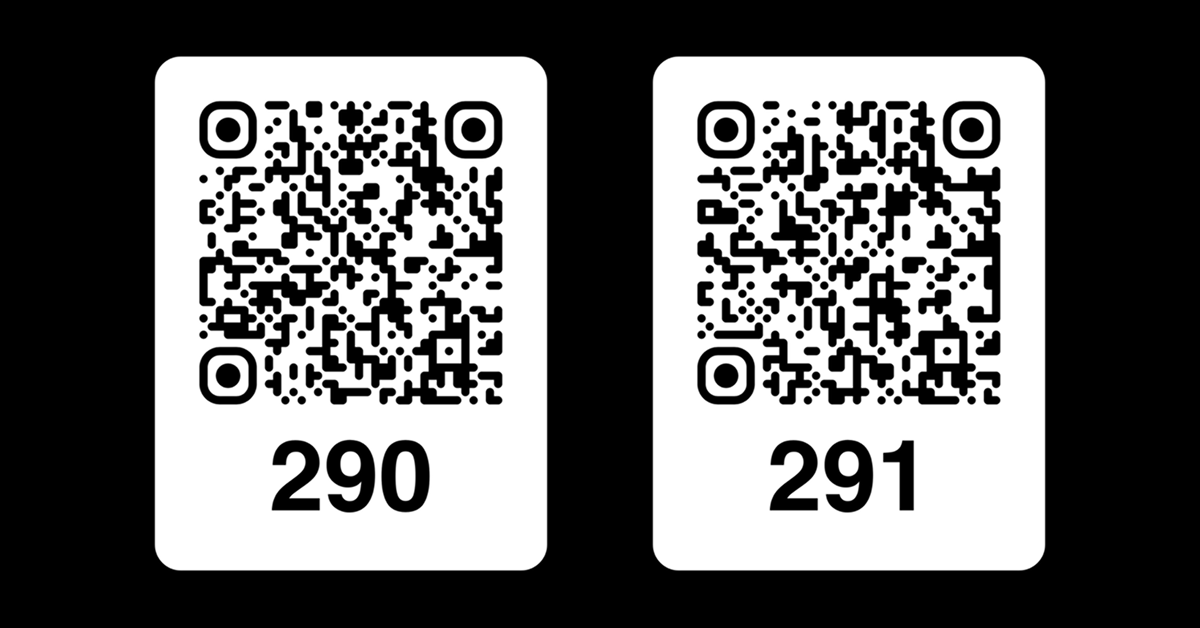
So I did the research and discovered audio QR codes. We're all familiar with QR codes; we see them at restaurants and banks. I wondered if you could put one in a book. I hired an expert, Constantine Kaiser, who has been my partner through this, and we developed a one-of-a-kind system. You point your mobile device at a code printed on the page, and it takes you to the sound. It gives you some fun controls too: you can slow it down or move it around. The idea is that when you land at a point where I want the sound to underscore the narrative, you can hear what I'm talking about. Sometimes I encourage the reader to let it play as they read on, like an ambience or a motif that sweetens the experience.
It's been months in testing, and just so the public knows: we don't scrape anything. The app opens, plays the sound and goes away. I don't know anything about who you are or where you are.
I'd been contemplating a book for 10 years, and 10 years ago I thought I'd send a CD with every print copy. Times changed, technology improved, and this is a much better way of doing it. I feel good, at 70 years old, being at the cutting edge of some kind of technology.
Even with the audio right there, you still had to put sound into words. What was the hardest sound or moment to describe on the page?
There's a chapter on onomatopoeia, words that are the sound of the thing they describe. Cock-a-doodle-doo is the onomatopoeic word for a rooster, and every language is full of them. I talk early in the book about my education at Hanna-Barbera, a cartoon studio where sound and onomatopoeia are inextricably tied. The sounds in the library are named with onomatopoeic words, so you already hear the sound in your ear before you've played it.
While I do get plenty granular, what I try to concentrate on is not how I solved problems, but why I solved them. Give a person a fish and they eat for a day; teach them to fish and they feed themselves for a lifetime. If I tell you how to make a sound, you learn one lesson that serves you once in your career. But if I teach you how to crack the code of making a sound, you'll be that much more prepared for everything that confronts you. That drives everything I do.
How did you decide which recordings and experiments readers would get to hear?
I wanted the writing to drive the book and the sounds to support the writing. I never allowed a sound to drive what I wrote about. Very often the point I'm trying to make is simply this: sound designers are not just technicians, we're storytellers. I wanted to tell stories about how sound narrates nonverbally, then play the sound to demonstrate how beautiful and economical that process is.
So first I wrote about what I thought were interesting moments in my career, and then I'd reread the book and think, this is where the sound goes. I often do a before and after so you really understand the sound design process. For the worm suction in Dune, you hear the original recording of the microphone in my throat, and next to it, what I turned it into. Hopefully you make the connection: that turned into that.
The editing took a year. I don't consider myself a writer, though apparently I am one now. My publisher, Paul Cronin at Sticking Place Books, walked me through the editing process with a great deal of grace and intelligence and helped me be a better writer. Every word in this book is mine. Not a smidgen of AI anywhere in it. Paul helped me reduce the clutter while keeping my voice. I'll candidly admit I used AI for fact-checking, for things like release dates and historical references, but there was absolutely no creative input.
Is there a story in the book, a happy accident or a creative choice, that you think will surprise readers?
A really obvious one, which I've talked about at seminars and lectures, is Dune. I had to create the sound of a giant sandworm, 400 meters long, with a maw about the size of the Capitol building, sucking down giant machines, people and hundreds of tons of sand. Worms like that don't exist, so I couldn't simply hang a microphone out to record one. I tried obvious sources, like a vacuum cleaner hose.
But as I very often do when I'm stumped to make something sound and feel organic, I went inward and decided to make the sound myself. I put a small lavalier microphone down my throat and made a huge sucking noise. Then, using simple old-fashioned sound design techniques, I slowed it down to quarter speed and added some bass and reverb. Bob's your uncle: a sandworm sucking in a spice harvester.
What draws you to a project these days?
Challenge and fun. I'm grateful to be at a place in my career where the financial side doesn't have a lot of pull. That was my goal since my 20s, so I could keep doing this work I love. This is my mission. I am sound. Now I only take projects because I'm interested in the content or the filmmakers, or because the project presents challenges I want to conquer: something to practice, or something I didn't know.
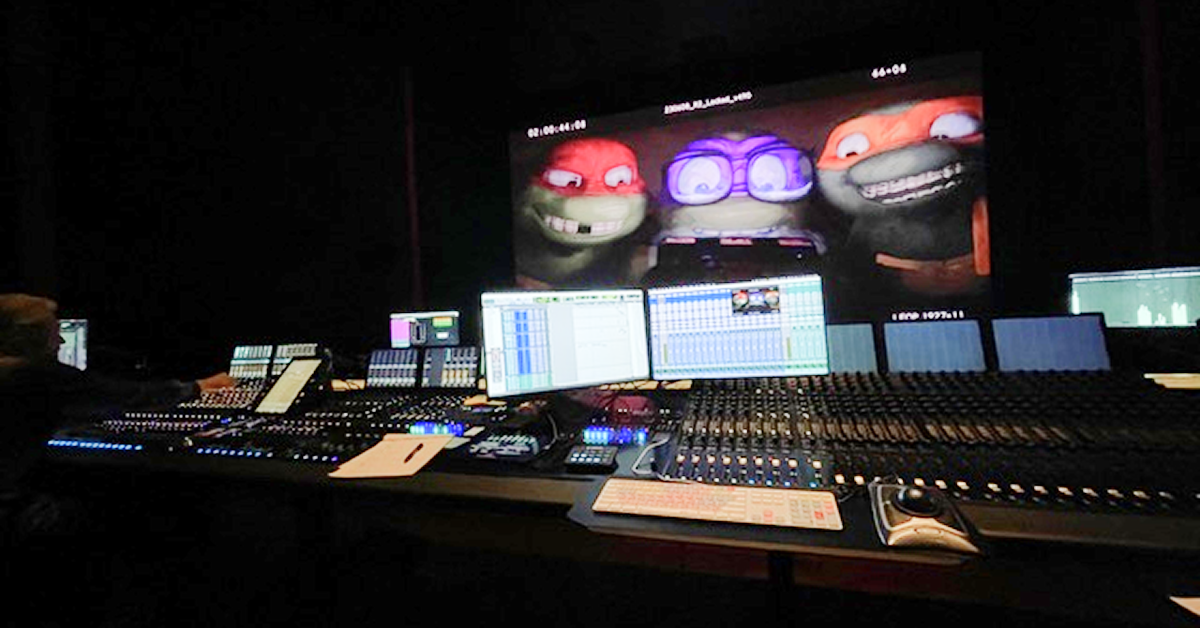
On the near horizon is the sequel to Teenage Mutant Ninja Turtles. I love that team and their fresh approach to the franchise. The director, Jeff Rowe, practices what I preach: sound should not be a post-production process. It should be part of the entire process, starting in pre-production. He brings me on as he's writing the script, recording the voices and hiring the composer, and he facilitates collaboration with the composer and the film editor. I become an essential part of the creative team, instead of an add-on.
Right after that is Running, for Apple, a beautiful movie about a high school kid who joins the track team and becomes a superstar. I hope Apple gives it a theatrical release. I've made six movies with Gavin O'Connor, and he'll call me while he's writing the script and ask whether sound can get us from point A to point B where words can't. One in 50 times, I have an idea where sound sells the narrative better than words.
If I can keep this process going, I'll work into my 80s. I have a 7.1 system in my home studio and an Atmos room at Formosa in Hollywood when I need it, and I still love sitting in my studio alone with a movie. It's a sandbox; anything is possible. I still wake up at 70 thinking, "I just realized how to solve that problem. I can't wait to get into the studio and build something."
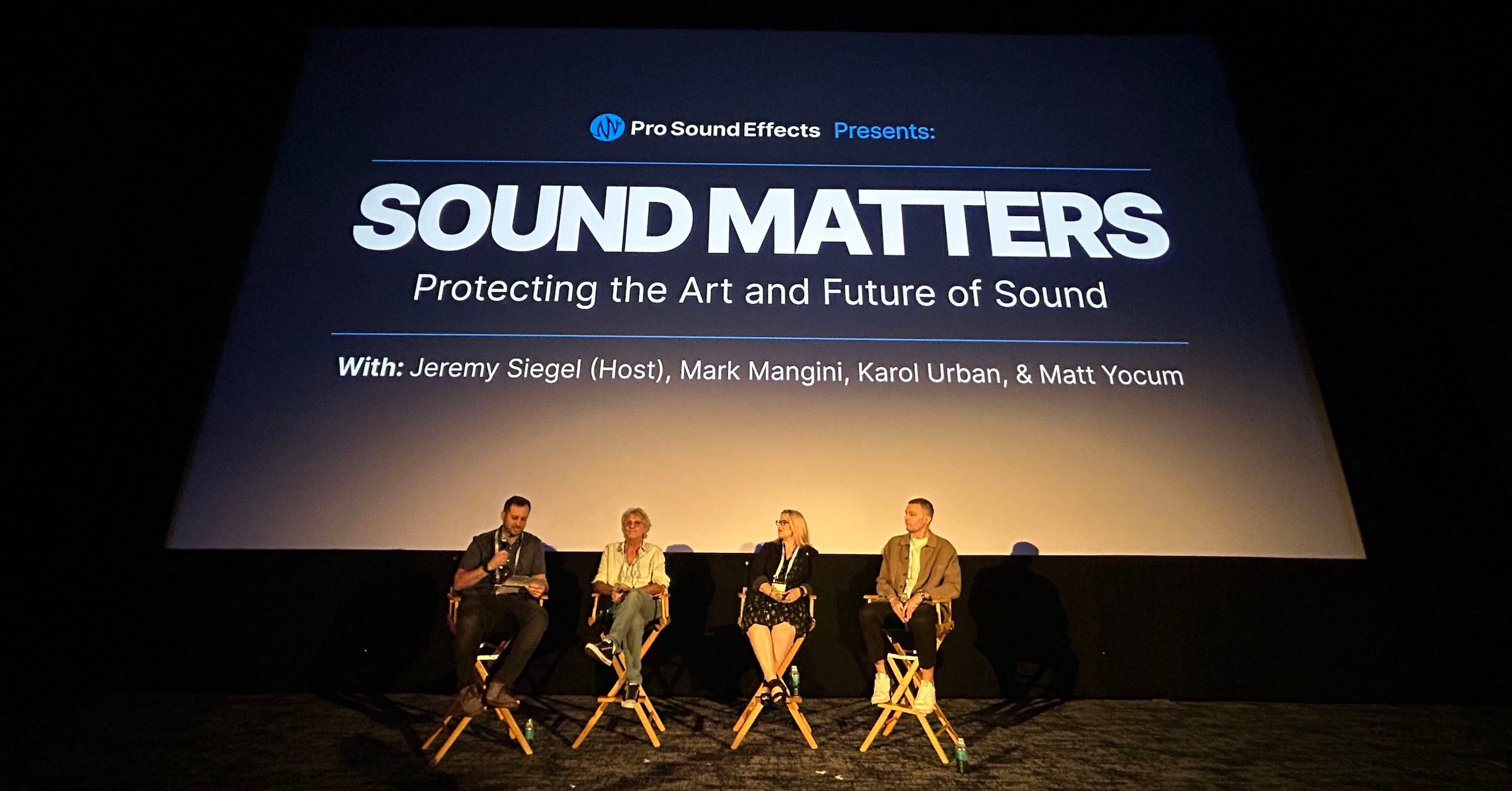
At a recent Mix Sound For Film & TV panel, you talked about protecting the art and future of sound. Why does that feel urgent right now?
If we are complacent, we will see our jobs in cinema sound replaced by AI, just as we're seeing massive displacement in other industries, including music creation and accounting. The list is endless. I've been envious of other organizations that are building consensus among practitioners and forming coalitions to fight the AI companies that are stealing our intellectual property. They're scraping our work to generate work for others and themselves, without compensation. If we don't join together and talk about this, there's just no hope.
I've never submitted my book to AI, but when I searched for how to promote a self-published book, AI already knew about it. It's scraping everything without me ever interacting with it.
You wrote the book for a general audience, but there's plenty in it for sound designers and mixers too. How did you approach writing for both?
I think a general audience's interests are the same as practitioners' interests, because my message is never technical. We all confront creative challenges every day, and these are the methods by which I confronted mine. It's a memoir, so it walks you through each challenge in a given movie and tells you why I solved that problem. I tell you a little of how, but I feel the why is more important. When you read through my creative process, you see an order in it that anyone can relate to, whether you're a costume designer or a cinematographer.
The why is always based on the story. Roger Deakins or Denis Villeneuve would tell you their job is to tell a story. My job is to tell a story with sound. I think a general audience will find that interesting, because they'll start to listen to movies in a different way and understand them more deeply. Sound communicates on a nonverbal level.
You'll never see me write in this book, "I put out a bipolar microphone and recorded at 48 kHz." That's noise-level stuff people don't need. We need aspirational material.
Is there anything else you want readers to know about the book?
I tried to write about failure, because I believe deeply in its value. Failure guides you to success. Books like this can feel like a never-ending parade of success, and no one's career is like that. So I included the moments when I didn't achieve, including a lengthy story about the only time I ever quit a movie. I don't name the film, because I don't think that's fair. The personalities on that project drove me to a very bad place, and I tell the story of how I got there and how I resolved it. I felt guilty about it for decades, and I think sharing it erased the demons.
There are two chapters I'm especially proud of, written on my publisher's advice: one on Gremlins and one on Mad Max: Fury Road. Each has a 20-page breakdown of a two-minute sequence, almost second by second, with stills from the film, showing how sound tells that part of the story. Practitioners might say, "Of course you did that there." But I think non-practitioners will get even more joy out of it, because they had no idea we do stuff like that.
And if you buy the book from Sticking Place Books, the price is significantly better than on Amazon. Sticking Place only ships to the continental United States and the UK, so outside those areas, Amazon is where you'll find it. But I encourage you to go to Sticking Place. It's an amazing place to find other books on our craft: cinematography, writing, directing, the history of cinema. It's a bonanza of gift ideas for the cinephiles in your life.
Think about what you hear
Most people don't think about sound, and Mark poses that question in the book's foreword. If the book has a theme, he says, it's exactly that: think about what you hear. His closing words come back to it too. It's all about listening.
Did You Hear That? Adventures in the Sound Trade is out now from Sticking Place Books.