



A perspective on AI and the future of sound
By Douglas Price, Founder & CEO of Pro Sound Effects | Chair, Professional Sound Alliance
"I believe in human rights in an AI world. And human rights in an AI world means respect for humanity backed by fair compensation for human artistry, craft, and labor."
— Douglas Price, PSA Chair, PSE Founder & CEO
This Moment Matters
We are living through one of the most important moments in history. AI is changing our world fast. What we do with it in this decade will shape the world our children and grandchildren inherit.
AI can be a great accelerator. It can help people create, learn, and bring ideas to life faster than ever. But used the wrong way, it is an existential threat to human creativity. That's why the rules we set right now matter so much.
To be clear: I am not against AI, and Pro Sound Effects is not against AI. I believe in AI for good. AI that works in service of humanity, not humans in service of AI. What I stand against is using someone's work to make money without permission and without paying for it, whatever the use case, tool, or application.
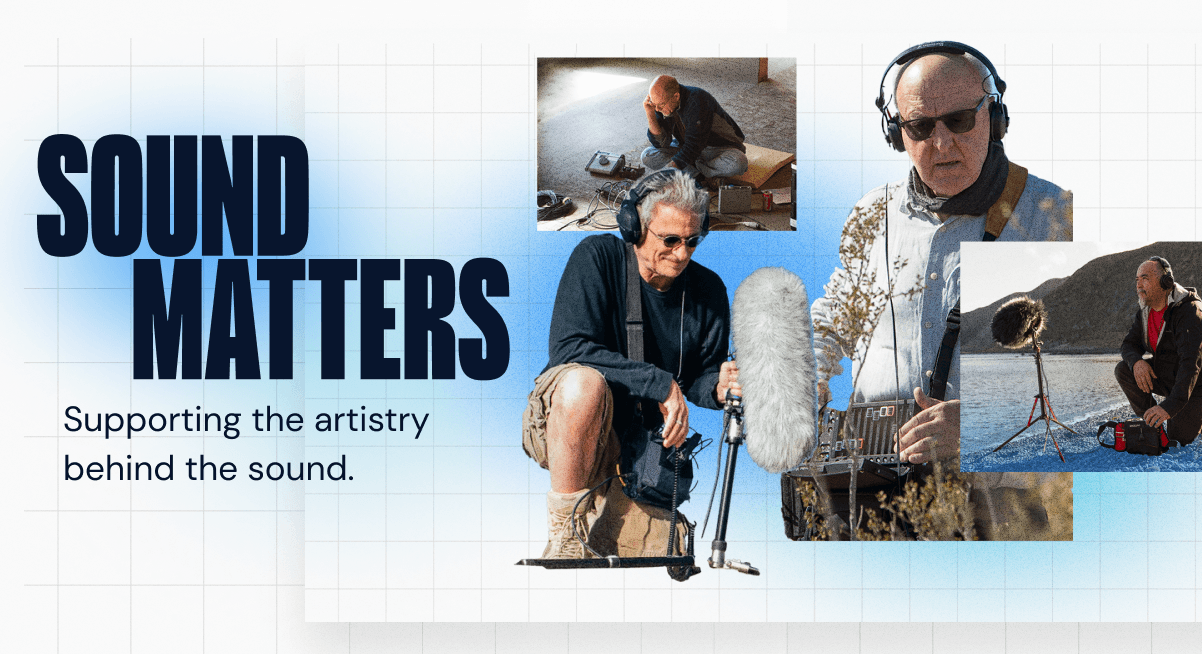
This is Part 4 of my Sound Matters series, and it's where everything comes together. Here is where Pro Sound Effects (PSE) and I stand on AI.
The World I'm Working For
I work for a future where what makes us most human, our creativity and the way we connect, gets to flourish. A world where experiences are real. Where art comes from real people, inspired by real life.
Think about the sound of a film like Dune. A single 10-second scene is often built on hundreds of meticulously layered sound effects. Each one is recorded, edited, placed, shaped, and mixed by artists who have given their lives to this craft. Professional sound design is like fine art painting. It is a uniquely human expression meant to evoke emotion, context, memory, imagination, and insight.
AI can help our craft as a creative co-pilot, a tool that eliminates tedious tasks, opening new possibilities and keeping people in a state of flow. But the spark should come from us: from listening, from the natural world, from our own lives.
I am working for a world that sounds better. A world where human expression thrives, supported by AI as a tool driven by human inspiration.
What I Want to Tell Future Generations
Here's something personal. I have a young son. One day, when his own kid is sitting on my lap and asks what I did with my life, I want to tell them this: I stood up for human rights in an AI world, right when AI started changing everything. I did it for everyone who came before me and everyone who will follow.
I want my son to know the value of working at a craft. Learning slowly and on purpose, away from the computer, out in the natural world. I want him to build discipline, instinct, creative and critical thinking that belong to him alone.
Take the tabla. Mastering the ragas takes years of discipline—demanding finger dexterity, microtonal precision, percussive gliding, and subtle staccato phrasing. If the entire next generation stops learning because they can just prompt a computer for a tabla loop, we lose more than just a skill. We lose ancient traditions that shape our spirit, our work ethic, and our culture. We cannot let our human roots wither and die.
For me, all of this comes down to a matter of the human soul, and what we choose to hold sacred. I want to look back and know I was on the right side of AI and contributed what I could to leave a better world for future generations to come.
What's at Stake for Sound
The biggest threat to our industry has always been people not paying for sound. AI scraping and using our sounds without license or compensation is simply the newest and largest version of that problem in history.
Sound has always been and continues to be taken for granted. It's an afterthought that's budgeted last and paid the least of all the media arts. AI has only sped that up.
Unlicensed use comes in two basic forms:
- Paying too little: People and companies not paying fairly for sound when they do pay.
- Not paying at all: Using sounds without a license, scraping, and stealing.
It ranges from honest mistakes to planned theft:
-
Misreported usage: Companies with valid licenses report their usage wrong because of outdated systems.
-
Casual piracy: Creators copying and sharing sound libraries on hard drives, cloud folders, and torrents.
- Large-scale scraping: Tech companies training AI on copyrighted sound effects without permission, then trying to hide it.
What keeps me up at night is theft. When our work is stolen, no one gets paid. As an independent company with no outside investors, that means less money to support our PSE team, 50+ sound artists, and their recordists. That means fewer resources to keep recording the real sounds of our world as it changes.
We can't stay passive and let people who care nothing for soul, culture, or craft decide what we experience. If we do, future generations will grow up without the freedom to express, experience, and learn from true human diversity. These are fundamental human rights.
The bleakest future looks like an episode of Black Mirror. AI feeds us generic "audio slop" in place of real human expression. Everything starts to look and sound the same, and culture, diversity, and meaning fade away. I refuse to accept that future for myself, for my family, or for any human being.
Moving Forward Together
The good news is that there is a way forward, and it is dead simple. Licensing is the answer, AI included.
For PSE, an AI company that wants sound to train its models is a client like any other. When a company licenses sound legally, our team and our artists get paid, we keep recording new sounds, our clients get updates to create better-sounding media and technology, and the flywheel keeps turning.
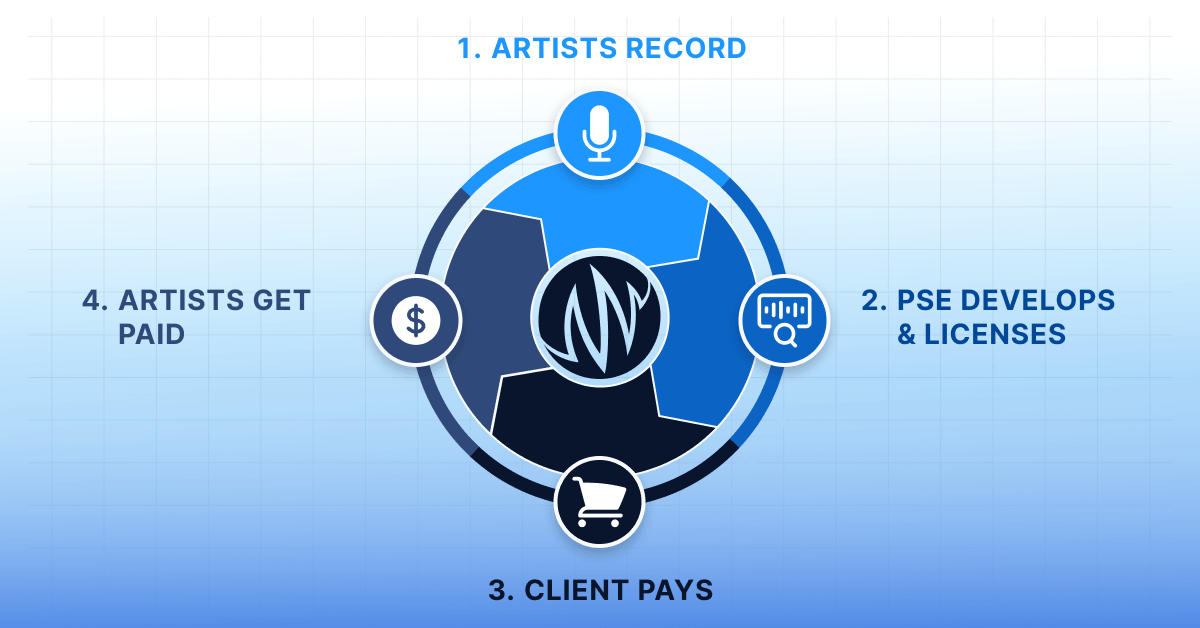
"Whether it's downloading a single sound for $5 on our website, or licensing to Netflix, Electronic Arts, or an AI developer, it's all the same. Our artists get paid every time we license a sound. It's that simple."
— Douglas Price
We've already shown this model works. PSE licenses sound for AI training through partners like Sureel and Musical AI (featured in The Hollywood Reporter). Both are built on transparency, attribution, and fair pay.
Many AI companies are starting to do this the right way. At PSE, our door is open. All we ask for is respect for the craft and fair licensing.
The Industry and Tools Are on Our Side
When most people think "audio," they think music and voice. But we are everything else. We are sound. Music and voice have groups like the RIAA and SAG-AFTRA behind them. Sound never has, and I'm here to change that.
That's why we helped launch the Professional Sound Alliance (PSA). I serve as Founding Chair. In its first month, nearly 1,000 sound professionals signed our founding petition.
"The unlicensed use of professional sound, online sound effects libraries, and recordings to train AI or create media unjustly threatens the livelihoods of the people and companies who have devoted their careers to the craft of sound."
— Douglas Price
Here's what is currently working in our favor:
-
The law is catching up. Cases like GEMA v. Suno and Thomson Reuters v. Ross (where PSE proudly signed the amicus brief), plus new training data disclosure rules in California and the EU, are building real accountability.
-
Technology can now hear the truth. New AI-powered attribution tools are becoming better than ever at detection.
-
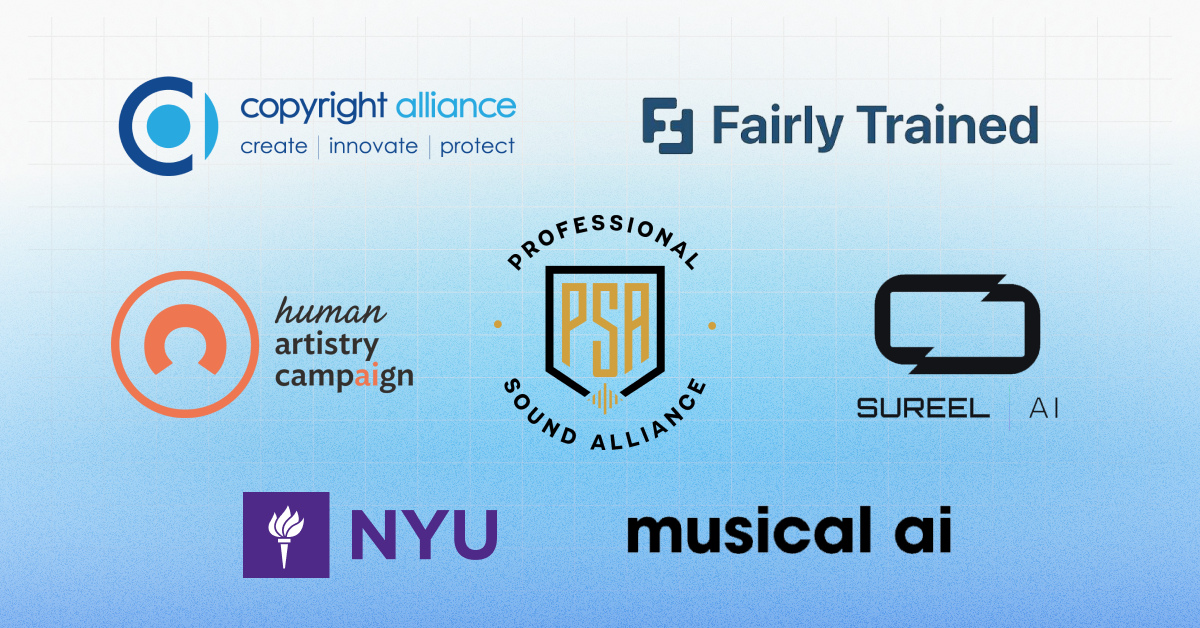
We have allies. Fairly Trained, the Human Artistry Campaign, the Copyright Alliance, the Dataset Providers Alliance, and the Content Authenticity Initiative. Partners like Musical AI and Sureel. And we provide data for research teams at MARL at NYU and Queen Mary University.
- We protect our artists. We educate, we help clients correct mistakes, and we enforce when theft is intentional.
To anyone scraping without permission, we are listening. So let's work with each other, not against each other.
A World That Sounds Better
I am deeply hopeful about the future of sound and a world that supports it. When sound is valued, companies like ours can invest more in capturing the sounds of our changing world. Picture a grandmother in affordable elder care, helped by a robot who can tell from another room whether she fell or just dropped a coffee mug that needs to be cleaned up. That same grandmother is joyfully experiencing the real sound of her granddaughter's first kickflip on a skateboard 3,000 miles away and the family there cheering in high fidelity. A world built on authentic sound will simply sound better.
"By 2030, I see a future where 1 in 8 people, over a billion voices, are expressing themselves through immersive media, bringing their own ideas to life through sound." — Douglas Price
Thank you to our team at PSE, our 50+ sound artists and their recording teams, as well as every partner who shares this mission. This is a fight for the human soul, and together we can win.
Here's how you can help:
-
Sign the petition. Join the Professional Sound Alliance and add your voice.
-
Spend with purpose. Support companies that license fairly and pay the artists behind the work.
- Speak up for sound. Share this blog and help the world hear why sound matters.
Sound shapes every story we watch, play, and build, yet it's rarely given its due. Keep reading to see what we're doing about that.
→ Why Sound Matters More Than Ever